Til hovedsiden

Publisert

Top 10 Fascinating Facts About Sloths

Sloths, the iconic slow-moving mammals of the American rainforests, have captivated human curiosity with their unique lifestyles and remarkable adaptations. Far more than just "lazy" creatures, they embody a masterclass in evolutionary strategy, thriving in their habitats through patience, specialization, and symbiosis. Below are 10 intriguing facts that reveal the hidden complexity and charm of these gentle arboreal dwellers.

A

Arthur

Signatur

Top 10 Fascinating Facts About Sloths

Sloths, the iconic slow-moving mammals of the American rainforests, have captivated human curiosity with their unique lifestyles and remarkable adaptations. Far more than just "lazy" creatures, they embody a masterclass in evolutionary strategy, thriving in their habitats through patience, specialization, and symbiosis. Below are 10 intriguing facts that reveal the hidden complexity and charm of these gentle arboreal dwellers.

Two Distinct Groups and Six Unique Species

Sloths are divided into two easily distinguishable groups based on the number of curved claws on their forelimbs: two-toed and three-toed sloths. As their names suggest, two-toed sloths (genus Choloepus) possess two claws on their front limbs, while three-toed sloths (genus Bradypus) have three claws on all four limbs. Beyond claw count, the two groups differ in size—two-toed sloths are slightly larger—and belong to separate taxonomic families. In total, there are six recognized sloth species, all native to the tropical rainforests of Central and South America. These include Hoffman’s two-toed sloth, Linnaeus’s two-toed sloth, the pygmy three-toed sloth, the maned three-toed sloth, the brown-throated three-toed sloth, and the pale-throated three-toed sloth. While four species are classified as "Least Concern" on the IUCN Red List, the maned three-toed sloth is listed as "Vulnerable," and the pygmy three-toed sloth—restricted to a small island off Panama—is critically endangered, making it the most at-risk sloth species.

Sluggish Digestion to Match a Slow Metabolism

Sloths are primarily folivores, meaning their diet consists almost entirely of tough, fibrous leaves, supplemented occasionally with fruits and tree sap. To break down this nutrient-poor, hard-to-digest food, they have evolved a large, multi-chambered stomach similar to that of cows, equipped with specialized bacteria that ferment the vegetation. This digestive process is extraordinarily slow, linked directly to their extremely low metabolic rate—one of the lowest among mammals. A sloth’s stomach can hold up to 37% of its body weight when full, and it may take days or even weeks to fully digest a single meal. Because digestion requires so much energy and time, sloths eat sparingly each day, consuming only about 0.3 to 0.4 kg of food—just enough to sustain their minimal energy needs without overtaxing their digestive systems.

Tree-Dwelling Lives: Hanging On for Dear Life

All modern sloths are arboreal (tree-dwelling) and suspensorial, meaning they spend nearly their entire lives hanging upside down from tree branches using their long, curved claws. Every aspect of their existence—feeding, sleeping, resting, mating, and even giving birth—takes place in the canopy. Their claws act as natural hooks, allowing them to cling effortlessly without expending energy, thanks to specialized tendons that lock their limbs in place. While trees are their safe haven, sloths occasionally must descend to the ground, a risky and awkward journey. Their long, clawed forelimbs and weak hind legs make walking on all fours impossible; instead, they drag their bodies across the forest floor using their arms, leaving them vulnerable to predators like jaguars and ocelots. These ground trips are rare, however, and most sloths will spend their entire lives within a small range of trees.

Picky Poopers: A Weekly Ritual

Sloths have one of the most unusual bathroom habits in the animal kingdom: they defecate only once a week, and they go to great lengths to do so. Despite the risk of predation, sloths will slowly climb down from their tree canopy to the base of the same tree, where they dig a small hole in the soil to deposit their waste. They then cover the hole with leaves before making the arduous climb back up. This behavior is puzzling to scientists, but several theories suggest it serves a purpose: it may help sloths avoid attracting predators to their tree with the smell of feces, or it could play a role in their symbiotic relationship with moths (more on that later). Whatever the reason, this weekly ritual is a testament to sloths’ meticulous nature—even when it comes to something as mundane as pooping.

Surprising Swimmers: Graceful in Water, Clumsy on Land

While sloths are notoriously awkward on the ground, they are surprisingly adept swimmers. Their long arms, which are inefficient for walking, act as powerful paddles in water, allowing them to move three times faster than they can on land. Sloths have a natural buoyancy thanks to their low muscle mass and dense fur, and they can hold their breath underwater for up to 40 minutes. This swimming ability is crucial for sloths living near rivers, mangroves, or flooded forests: they may swim long distances to find new feeding grounds, escape predators, or search for potential mates. In fact, some sloths have been observed swimming across wide rivers in the Amazon basin, using their slow but steady strokes to navigate the currents.

Slow Pace as a Survival Strategy

Sloths’ famous slowness is not laziness—it’s a carefully honed survival strategy. Their low-energy diet of leaves provides little nutrition, so sloths have evolved to conserve energy by moving as little as possible. They typically sleep 15 to 20 hours a day, hanging motionless from branches, and when they do move, their speed rarely exceeds 0.24 km/h (0.15 mph). This slow pace helps them avoid detection by predators like harpy eagles, which hunt by detecting movement. Additionally, their low metabolism reduces their need for food and water, allowing them to survive in environments where resources are scarce. The success of this strategy is evident in their longevity as a species: sloths have existed for 65.5 million years, emerging just before the extinction of the dinosaurs, proving that "slow and steady" truly wins the race for survival.

Giant Ancestors: From Elephant-Sized Giants to Modern Sloths

Sloths’ family tree includes some impressive giants. Millions of years ago, Earth was home to ground sloths—massive creatures that roamed the Americas. The largest of these, Megatherium, stood over 6 meters tall (20 feet) and weighed up to 4 tons—about the size of an African elephant. Another giant, Megalonyx, was the size of a pony and inhabited North America until around 10,000 years ago. These ground sloths were also folivores, but their large size allowed them to feed on leaves high in trees and defend themselves from predators. There was even a marine sloth, Thalassocnus, which adapted to life in the ocean, feeding on seagrass along the coasts of South America. While these giants went extinct during the Pleistocene epoch, their modern relatives—today’s tree-dwelling sloths—carry on their legacy of specialization and adaptation.

Fur as a Microcosm: A Home to Moths, Algae, and Fungi

A sloth’s fur is not just hair—it’s a thriving ecosystem. The coarse, shaggy fur has a unique structure that allows it to absorb and retain water, creating the perfect environment for green algae, fungi, microbes, and insects. The most famous inhabitants are Cryptoses choloepi moths, whose entire lifecycle is dependent on sloths. When a sloth descends to defecate, female moths lay their eggs in the sloth’s dung. Once the eggs hatch, the caterpillars feed on the dung before maturing into adult moths, which then fly up to the sloth’s fur to mate and lay their own eggs. In return, the moths provide nutrients to the algae growing in the fur. This symbiotic relationship benefits the sloth too: the green algae give the sloth’s fur a camouflage color, helping it blend into the leaves and avoid predators. The algae also provide a supplementary food source—sloths have been observed licking algae off their fur to gain extra nutrients.

Impressive Lifespan: Up to 43 Years in Captivity

Sloths have a surprisingly long lifespan for such slow-moving mammals. In the wild, two-toed sloths typically live up to 20 years, while three-toed sloths may live slightly shorter lives due to their more specialized diet and higher vulnerability to predation. However, accurate lifespan estimates in the wild are rare, as sloths are difficult to track and study. In captivity, sloths can live much longer: the oldest recorded sloth, a Hoffman’s two-toed sloth named "Miss C," lived to be 43 years old at a zoo in Germany—more than twice the average lifespan of wild sloths of the same species. This extended lifespan in captivity is due to access to consistent food, medical care, and protection from predators, allowing sloths to reach their full potential lifespan.

Vulnerable to Deforestation: Threats to Their Rainforest Home
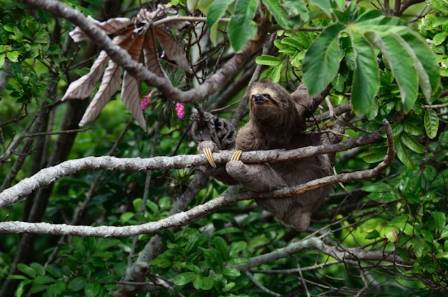
Despite their evolutionary success, sloths face significant threats in the modern world. While most species are listed as "Least Concern" on the IUCN Red List, habitat loss and fragmentation due to deforestation are major risks. Sloths are highly dependent on intact tropical rainforests for food, shelter, and space—each sloth requires a large range of trees to meet its dietary needs. As forests are cleared for agriculture, logging, and human settlement, sloths lose their homes and are forced to move into smaller, isolated patches of forest, increasing their risk of starvation, predation, and inbreeding. Illegal wildlife trade is another threat: sloths are often captured and sold as exotic pets, a practice that is both cruel and unsustainable. Populations in Colombia, Brazil’s Atlantic Forest, and other parts of their range are already declining, making conservation efforts crucial to protecting these gentle giants.

Flere anbefalte saker

6 Essential Ways to Transform Your Room with a Stone Diffuser (+ Crystal Scent Guide)

6 Essential Ways to Transform Your Room with a Stone Diffuser (+ Crystal Scent Guide)

Imagine coming home after a long day to a gentle, grounding aroma filling your space. No flames, no electricity—just calm. This is the subtle charm of a natural stone diffuser, a flame-free, elegant way to infuse your home with fragrance intentionally.
LLydia Hart
Stellar Sanctuaries: 7 Incredible Dark Sky Reserves Around the Globe

Stellar Sanctuaries: 7 Incredible Dark Sky Reserves Around the Globe

The International Dark-Sky Association (IDA) is making strides to protect our night sky, a treasure trove of cultural and scientific significance. As urbanization and artificial light become more pervasive, the allure of stargazing in pristine darkness has never been more appealing. To help preserve this celestial heritage, the IDA designates specific areas as dark sky reserves, ensuring that present and future generations can marvel at the night sky's wonders. Here are 7 remarkable dark sky reserves from around the world, perfect for star enthusiasts seeking an escape from light pollution.

JJacob
Top 8 Things to Consider Before Placing Your Couch in Front of a Window

Top 8 Things to Consider Before Placing Your Couch in Front of a Window

A living room layout can be significantly influenced by where you place your couch, and placing it in front of a window can dramatically change the vibe of the room. While this decision may seem bold, it has the potential to transform the space into a more inviting, light-filled area. However, this design choice comes with both its advantages and drawbacks. In this article, we’ll explore key factors to help you decide if positioning your couch by the window is the right move for you.

PPatricia
2 Iconic Warplanes That Changed Aerial Combat

2 Iconic Warplanes That Changed Aerial Combat

Throughout the annals of history, warfare has consistently shaped the world. As we ventured through the 20th and 21st centuries, the role of aircraft became ever more crucial, influencing battle outcomes and acting as significant deterrents against potential aggressors. The evolution of military aircraft was notably marked during World War II, with their capabilities rapidly expanding during the Cold War and beyond. Here, we spotlight some of the most renowned warplanes that left an indelible mark on aviation and military history.

HHarper
5 Simple Ways to Create Your Own Cozy Corner at Home

5 Simple Ways to Create Your Own Cozy Corner at Home

In today’s fast-paced world, we all need a peaceful space to unwind and take a break from the constant hustle. Creating a cozy corner at home is one of the easiest ways to carve out a retreat where you can relax and recharge. This cozy nook can be tucked into any available space in your home, whether it's in a quiet corner of your living room, a nook in your bedroom, or even an underused space like a staircase landing. The best part is that you don’t need to completely redesign your space; with a few thoughtful touches, you can turn any area into your own personal sanctuary.

TTina
The Perfect Matcha Latte Recipe

The Perfect Matcha Latte Recipe

A well-made matcha latte is one of the most rewarding drinks to prepare at home. It’s quicker than running to a café, more budget-friendly, and—if you choose your matcha wisely—far superior in flavor. We’ve tested this recipe hundreds of times, and it has become a daily ritual for many of our team.

TTaylor Morgan
The World’s Most Breathtaking Coastal Cities: Our Final Four

The World’s Most Breathtaking Coastal Cities: Our Final Four

Whittling down a list of stunning coastal metropolises wasn’t easy. We began with 15 contenders, narrowed it to six, debated fiercely, and eventually settled on the final four. These aren’t just cities with a sea view—they’re mesmerizing destinations where nature, culture, and atmosphere collide.

MMolly
Master Techniques for Sculpting with Polymer Clay

Master Techniques for Sculpting with Polymer Clay

Polymer clay is a versatile, accessible, and affordable medium that allows artists to manifest virtually any creative vision. Whether you are looking to pivot away from digital hobbies or simply wish to explore a tactile craft, oven-bake clays like Super Sculpey provide a professional finish with minimal equipment. The following guide details essential sculpting and finishing methods to elevate your clay projects.
TTheodore Pembroke
10 Famous Animal Paintings by World-Renowned Artists

10 Famous Animal Paintings by World-Renowned Artists

Animals have long been a central theme in art, symbolizing everything from strength and elegance to innocence and mystery. From ancient cave paintings to contemporary works, artists have been captivated by the beauty and meaning of the animal world. This article highlights ten of the most famous animal paintings by internationally acclaimed artists, each offering a distinct perspective on the connection between humans, animals, and nature.

SSeraphina Vale
12 Fascinating Facts About the George Washington Bridge

12 Fascinating Facts About the George Washington Bridge

The bridge links sites rich in Revolutionary War history: on one side, the Man­hattan side near Fort Washington, and on the other, Fort Lee in New Jersey. Prior to his famed crossing of the Delaware, George Washington had earlier fled the area after an unsuccessful campaign, falling back from Whit e Plains. A few days later Fort Lee would also come under British control.

NNoah Bennett