Publisert
Most Famous Music Paintings
Music and visual art have always shared a deep and enduring connection. Both serve as expressive outlets that transcend background, culture, and social status, allowing people from all walks of life to communicate emotion and imagination.
Anna Clark
Signatur

Music and visual art have always shared a deep and enduring connection. Both serve as expressive outlets that transcend background, culture, and social status, allowing people from all walks of life to communicate emotion and imagination.
Creative practices such as painting, composing music, writing literature, and dancing all enrich human experience. Together, they form a vibrant cultural fabric that reflects both individual expression and shared heritage.
Throughout art history, many painters have drawn inspiration directly from music. Musical instruments, performers, and sound itself have been translated into visual form, resulting in some of the most memorable artworks ever created. Below is a closer look at several renowned music-themed paintings and the artists behind them.
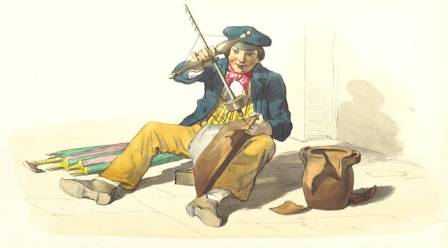
Famous Music-Inspired Paintings
The Music Lesson – Johannes Vermeer
Johannes Vermeer’s painting, also known as The Music Lesson or A Lady at the Virginals with a Gentleman, depicts a young woman receiving instruction at a keyboard instrument from a man who appears to be softly singing along.
The interaction between the two figures suggests emotional closeness, hinting at a connection between romance and music—a common theme in Dutch painting of that era. Vermeer frequently reused familiar interior elements such as tiled floors, draped fabrics, musical instruments, and carefully controlled natural light.
This particular work remained in Vermeer’s household until his death in 1675 before being sold by his family. It eventually entered the Royal Collection and is now displayed in London at the Queen’s Gallery in Buckingham Palace.
The Musicians – Caravaggio
Painted around 1595, The Musicians (also called The Concert of Youths) is an early Baroque work by Italian master Caravaggio.
The composition shows four young figures dressed in classical-style clothing. Three of them play instruments or sing, while the fourth—often interpreted as Cupid—reaches toward grapes. The scene blends music, desire, and symbolism, suggesting that music nourishes love just as food sustains life.
The painting is currently housed in the Metropolitan Museum of Art in New York and remains one of Caravaggio’s early commissioned masterpieces.
The Cellist – Amedeo Modigliani
Amedeo Modigliani, an Italian artist active mainly in France, is known for his elongated portraits and expressive figurative style. The Cellist reflects his signature approach, featuring stretched proportions and simplified forms.
During his lifetime, Modigliani’s work was not widely appreciated, but it later gained significant recognition. He studied classical and Renaissance art in Italy before moving to Paris, where he interacted with major modernist artists such as Picasso and Brâncuși.
This painting demonstrates his unique visual language, which cannot easily be categorized within traditional artistic movements.
Orchestra Musicians – Edgar Degas
Edgar Degas created Orchestra Musicians in 1872, later revising it in 1874. The original composition included both musicians in the orchestra pit and ballerinas on stage, but Degas later cropped and adjusted the canvas to emphasize the musicians more clearly.
This work marked the beginning of Degas’s long exploration of performance and movement, especially ballet scenes. His unusual framing techniques and focus on behind-the-scenes moments made his work distinctive within Impressionism.
The Wedding at Cana – Paolo Veronese
Painted in 1563, The Wedding at Cana by Paolo Veronese illustrates the biblical story in which Jesus transforms water into wine.
This monumental Renaissance painting is known for its grand scale and richly detailed composition. It reflects the luxurious banquet culture of 16th-century Venice, blending religious narrative with contemporary social life.
Veronese’s work demonstrates the Renaissance ideal of harmony, inspired by masters such as Leonardo da Vinci, Raphael, and Michelangelo.
El Jaleo – John Singer Sargent
El Jaleo, completed in 1882 by John Singer Sargent, depicts a dramatic Spanish Gypsy dancer accompanied by musicians.
Inspired by Sargent’s travels through Spain and North Africa, the painting captures movement, theatrical lighting, and cultural energy. The composition reflects his fascination with performance, costume, and atmosphere.
The title refers both to a lively disturbance and a traditional Spanish dance style, reinforcing the energetic mood of the scene.
The Piano Lesson – Henri Matisse
Henri Matisse’s The Piano Lesson portrays his home interior, featuring his son playing the piano alongside symbolic objects such as sculptures and paintings.
Originally planned as a realistic scene, Matisse gradually simplified the composition, using large color fields and geometric shapes. The contrast of light and shadow, along with symbolic elements like a metronome and candle, suggests themes of time, discipline, and artistic creation.
Today, the painting is part of the collection of the Hermitage Museum in Saint Petersburg.
Three Musicians – Pablo Picasso
Pablo Picasso’s Three Musicians (1921) is a key example of Synthetic Cubism. The painting features three stylized figures representing musicians, constructed from flat, geometric shapes.
The characters are often interpreted as symbolic representations of Picasso and his friends. Despite being an oil painting, it resembles a collage due to its sharp, cut-out-like forms.
This work reflects Picasso’s shift toward bolder color, simplified structure, and innovative visual experimentation after 1914.
The Fiddler – Marc Chagall
Marc Chagall’s The Fiddler (1913) portrays a violinist from his hometown in a dreamlike, expressive style.
Chagall often combined memory, folklore, and emotion in his work. In this painting, the fiddler symbolizes life’s key moments—birth, marriage, and death—accompanied by vivid, contrasting colors that express inner emotional tension.
His work bridges modernism with personal symbolism, creating a poetic visual language.
Music – Henri Matisse
Henri Matisse’s large-scale painting Music (1910) was commissioned by Russian collector Sergei Shchukin and displayed alongside his famous Dance composition.
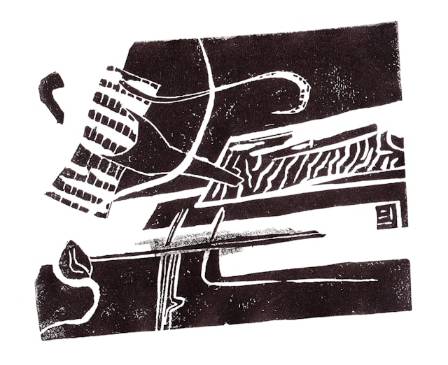
Created without preparatory sketches, the painting shows visible adjustments and revisions. It reflects Matisse’s exploration of harmony, rhythm, and human unity through color and simplified form.
Today, Music is preserved in the Hermitage Museum in Saint Petersburg and remains one of Matisse’s most important works.
These paintings demonstrate how music and visual art continually inspire one another. Through rhythm, movement, and emotion, artists have transformed sound into imagery, creating works that continue to resonate across generations.
Flere anbefalte saker

Enhancing Your Living Space with Plush Seating
In the world of contemporary interior aesthetics, your lounge area acts as a mirror to your personal identity. Among the various furniture options available, a plush armchair stands out as both a bold design statement and a sanctuary for relaxation. Whether your preferences lean toward modern minimalism, bohemian flair, or classic elegance, the right upholstered chair introduces warmth, sophistication, and a distinctive character to your home.

Discover the Ultimate Pacific Coast Highway Adventure
Prepare to embark on an unforgettable journey along the iconic Pacific Coast Highway, also known as Highway 1. Our meticulously crafted Pacific Coast Highway road trip itinerary will guide you through the most captivating stops on this scenic route.

The Most Essential 6: Why Trees Deserve Your Gifting Consideration
Trees are more than decorations for our world; they are lifelines. From cleaning our air to cooling our cities, shaping watersheds to hosting countless species, trees sustain life and improve well-being. This piece distills six key roles trees play in ecosystems and human life, and explains why giving trees as gifts can be a meaningful, lasting gesture.

10 Smart Tips for Pairing Shirts with Suits Like a Pro
A well-fitted suit forms the backbone of men’s fashion, but the true artistry lies in choosing the right shirt to complement it. The right combination transforms a standard outfit into a polished statement. From colors and fabrics to subtle details, here are ten essential tips to help you perfect the shirt-and-suit pairing game.
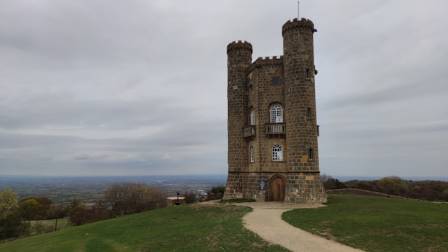
Broadway Tower: A Timeless Folly of the Cotswolds
Nestled atop Broadway Hill—an elevated vantage point within the rolling, honey-stoned landscape of the Cotswolds—Broadway Tower stands as one of England’s most iconic and intriguing architectural landmarks. Located in the village of Broadway, Worcestershire, within the United Kingdom, this structure is more than just a tower; it is a “folly” — a term in architecture that describes buildings primarily constructed for decorative or symbolic purposes, often boasting elaborate, whimsical designs that transcend purely functional needs. Yet Broadway Tower’s legacy extends far beyond its ornamental roots, weaving through centuries of history, art, politics, and conservation to become a cherished symbol of the Cotswolds’ cultural and architectural heritage.

Whispers of the Cosmos
On clear nights, when the sky is a canvas of stars, a fleeting streak of light may catch your eye. These are shooting stars, or meteors, and though they blaze across the sky in silence, they carry tales from the cosmos. Each flash is a brief messenger from the universe, sharing stories of cosmic events, ancient origins, and the intricate dance of celestial bodies.

Exploring Tulip Season with Bloomeffects: A Dutch Delight
The Netherlands boasts a myriad of attractions, from the vibrant cityscape of Amsterdam to its iconic canals and distinctive traditions. Among these, the enchanting tulip fields emerge as a captivating spectacle, drawing visitors from around the globe. As the tulip season concludes and farmers gear up for the next bloom, Bloomeffects shares fascinating insights and essential tips for respectfully enjoying these fields in the coming year.
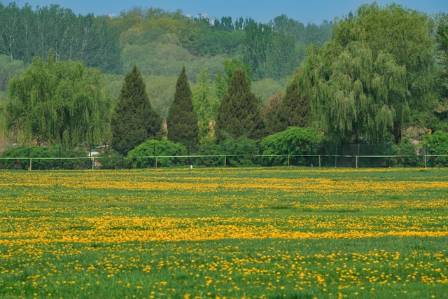
Top 10 Largest Grassland Regions Across the Globe
Sweeping expanses of grass-dominated terrain—often referred to as prairies, savannas, or steppes—rank among the Earth’s most vital natural environments. These sprawling fields are defined by endless grasses, undulating landscapes, and a remarkable variety of life. For centuries, they’ve sustained civilizations through pastoralism, farming, and as backdrops to cultural traditions. Each region bears a story uniquely its own, shaped by ecology, climate, and history.

Top 8 Most Scenic Roads in the World
For those seeking adventure and unparalleled natural beauty, nothing beats a scenic road trip. From coastal cliffs to towering mountains and serene lakes, these routes offer some of the most spectacular views you can experience on four wheels. Here are eight of the world’s most breathtaking drives, each offering a unique journey through nature’s wonders.

The Extraordinary World of Sea Turtles
Sea turtles are among the most mysterious and captivating residents of our oceans. Spending the vast majority of their lives in the water, these marine reptiles have been the subject of intensive scientific study for decades. While much about their lives remains hidden beneath the waves, researchers have uncovered remarkable details about their history, biology, and survival strategies.