Publisert
The Secrets of the Pink Bird: Surprising Flamingo Discoveries
Beyond their vivid rose-colored plumage, flamingos are among the most distinct and specialized avian species on the planet. From their unique nesting habits to their remarkable physiological adaptations, these birds thrive in environments that would be inhospitable to most other creatures. Understanding the biology and behavior of the flamingo reveals a story of survival, complex social structures, and a highly specialized diet.
Olivia Turner
Signatur
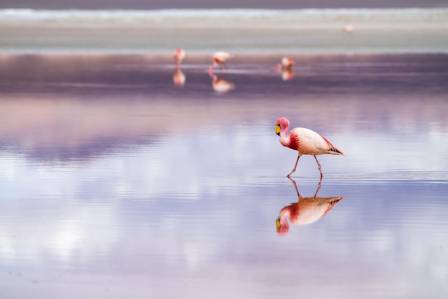
Beyond their vivid rose-colored plumage, flamingos are among the most distinct and specialized avian species on the planet. From their unique nesting habits to their remarkable physiological adaptations, these birds thrive in environments that would be inhospitable to most other creatures. Understanding the biology and behavior of the flamingo reveals a story of survival, complex social structures, and a highly specialized diet.
The Science Behind the Pink Hue
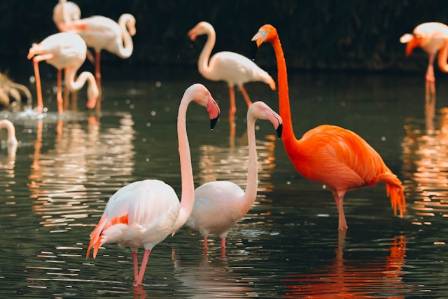
The most famous characteristic of the flamingo—its vibrant pink color—is actually a result of its environment rather than genetics. Flamingos are born with gray, downy feathers; they only acquire their signature look through their diet. Many of the organisms they consume, such as microscopic algae and brine shrimp, are rich in organic pigments called carotenoids. As the flamingo digests these items, its body processes the pigments and deposits them into the growing feathers.
Specialized Feeding and Habitats
Flamingos are one of the few bird species that function as filter feeders. Similar to the mechanism used by baleen whales, flamingos use their tongues to pump water through comb-like plates in their beaks, trapping small seeds, insects, and crustaceans while expelling excess water. During this process, they typically hold their heads upside down to better navigate the shallow waters where their prey resides.
These birds are often found in extreme environments, such as "soda lakes" characterized by high concentrations of corrosive carbonate salts. While these waters can burn the skin of most animals, flamingos have evolved tough, protective skin on their legs to withstand the alkaline conditions. This allows them to exploit food sources that face little competition from other predators.
Diverse Species and Global Populations
There are six distinct species of flamingos distributed across the globe. The Greater Flamingo is the largest and most widespread, found in parts of Africa, Asia, and Europe. In contrast, the Andean Flamingo is the rarest, with a population of fewer than 40,000 birds. The Lesser Flamingo, while the smallest in size, is the most numerous, with over 2 million individuals inhabiting Africa and Southern Asia. In the Americas, the Caribbean (or American) Flamingo is the most prominent, with a wild population estimated at roughly 200,000.
Social Structure and Reproductive Habits
Flamingos are highly social birds that gather in massive groups known as a "flamboyance." In the wild, these colonies can number in the thousands, providing safety in numbers. Within these groups, flamingos are primarily monogamous. Breeding pairs work together as a team to construct volcano-shaped nests made of mud, which elevate a single large egg above the waterline.
Once a chick hatches, both parents take turns providing nourishment. They secrete a nutrient-dense liquid known as "crop milk" from their throats. This substance is rich in fats and proteins, sustaining the young birds until their beaks develop the specialized hook shape required for independent filter feeding.
Misunderstood Anatomy and Behaviors
A common misconception regarding flamingo anatomy is that their knees bend backward. In reality, the joint visible in the middle of a flamingo's leg is actually the ankle. Their actual knees are located much higher up the leg, obscured by their body and feathers. Essentially, a flamingo stands on its tiptoes.
The iconic sight of a flamingo standing on a single leg is also a matter of efficiency. Research indicates that this posture requires less muscular effort than standing on two legs, allowing the bird to remain stable even while sleeping. Furthermore, by tucking one leg into their feathers, flamingos can conserve body heat that would otherwise escape through their limbs, a vital adaptation for maintaining their internal temperature in cool water.
Flere anbefalte saker
The Extraordinary World of Sea Turtles
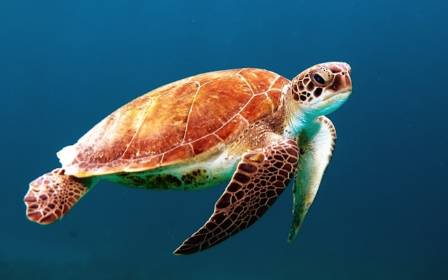
Sea turtles are among the most mysterious and captivating residents of our oceans. Spending the vast majority of their lives in the water, these marine reptiles have been the subject of intensive scientific study for decades. While much about their lives remains hidden beneath the waves, researchers have uncovered remarkable details about their history, biology, and survival strategies.

An In-Depth Guide to the Wonders of Outer Space
The cosmos offers a vast and captivating array of scientific, historical, and cultural phenomena. From the swirling gases of distant galaxies to the rocky surfaces of our neighboring planets, the universe is filled with objects that challenge our understanding of physics and time. By studying the latest astronomical discoveries and examining the structure of our solar system, we gain a clearer perspective on the celestial environment that surrounds our world.

6 Reasons Why Football Is The Most Popular Sport In The World
Football is undeniably one of the biggest sports in the world, with an estimated 3.5 billion fans worldwide—that’s nearly half of the global population.

Six Colour Pairings That Work Beautifully With Blue
From deep navy shades that almost read as black to pale blues that verge on white, blue exists across an incredibly wide spectrum of colour.

Fundamentals of Paper Sculpture: A Guide to Origami Animals
Origami, the traditional Japanese practice of transforming paper through folding, has evolved into a globally cherished hobby suitable for enthusiasts of all ages. While certain designs involve high levels of complexity, the craft offers numerous accessible entry points for those just beginning their journey. With nothing more than a perfectly square sheet of paper, you can produce charming representations of cats, frogs, and foxes.

12 Papercut Artists You Should Know
Papercutting (or paper cutting) is the art of crafting intricate designs from paper—an artistic form that has evolved globally, adapting to diverse cultural aesthetics and traditions. At its core, papercutting is about embracing intuitive creation: improvising and playing with nothing more than paper, a pair of scissors, and boundless imagination.

10 Fascinating Facts About Berlin Cathedral You Probably Didn’t Know
Berlin Cathedral, standing proudly on Museum Island, is one of Germany’s most iconic landmarks. With its massive dome, intricate history, and cultural significance, this church is far more than just an architectural gem. Let’s uncover ten intriguing facts about this remarkable building.
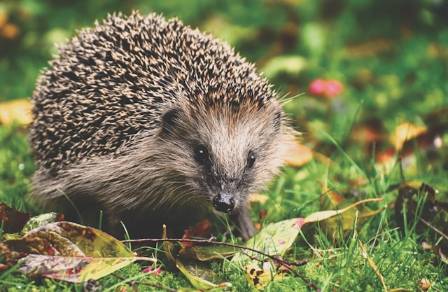
Understanding the Hedgehog: Nature’s Defensive Mammal
Hedgehogs are members of the Erinaceidae family and belong to the genus Erinaceus. Classified as mammals, these creatures generally live for about seven years in their natural environment and can grow to weigh up to 1.1kg. Their bodies typically measure between 14cm and 30cm in length, and they are capable of moving in quick bursts at speeds of 9.5km/h. These animals primarily inhabit woodlands, meadows, grasslands, and hedgerows across Africa, Asia, and Europe.

8 Must-Try Classic Dim Sum Dishes for Your Next Yum Cha
Yum cha menus are overflowing with options—from dumplings and steamed rice to buns and fried seafood—and there are some classic Cantonese-style dishes that are non-negotiable orders for any dim sum lover. Over years of enjoying yum cha across Asia and Australia with family and friends, I’ve stuck to a go-to lineup of these beloved bites, only occasionally branching out to try something new.

Delving into the Realm of New York: Navigating the Ever-Awake City
When envisioning the quintessential American metropolis, the mosaic of skyscrapers, the vibrant culture, and the ceaseless dynamism of New York City unfurl in the mind's eye. As the most densely populated city in the nation, pulsating with 8.5 million souls, it stands as an emblem of financial prowess, educational excellence, and cultural diversity.