Publisert
Guide: Illustrating a Parisian Urban View in Watercolors
The streets of Paris serve as an endless fountain of inspiration, defined by historical architecture and a unique, pulsing energy.
Joseph Wilson
Signatur
The streets of Paris serve as an endless fountain of inspiration, defined by historical architecture and a unique, pulsing energy. The intricate details of the buildings, combined with the shifting interplay of light and shadow on the facades, create a captivating atmosphere. In a typical Parisian scene, the central architecture stands as a proud focal point, framed by surrounding structures that provide depth and balance. Elements like bustling crowds, vehicles, classic street lamps, and hanging banners all contribute to the city’s vibrant spirit. By utilizing loose brushwork and precise detailing, an artist can translate this urban vitality onto paper, capturing the warmth of a sunny day.
Establishing the Foundation
The initial drawing is the most critical phase of the process. It is the stage where the artist truly learns to observe how structures, people, and objects occupy and connect within a physical space. Beyond mere outlines, a solid sketch provides the necessary clarity and confidence to support the subsequent paint layers. No matter how fluid or "loose" the final brushstrokes may be, they must rest upon a well-observed structural base to be successful.
Creating the Sky and Background
The process begins with the sky, using Ultramarine Blue as the primary pigment. By varying the water-to-paint ratio, different moods can be established. Applying rich, wet color to dry paper with a large mop brush creates a bold start; while the surface is still moist, droplets of clean water can be introduced to generate soft, organic textures.
The first wash of the buildings follows, setting the overall tonal warmth. Yellow Ochre serves as an excellent base for the structures, with hints of red added to suggest early dimensions in shaded areas. In the foreground, a transparent mix of red and Burnt Sienna, tempered with a neutral tint, establishes the initial, soft shadows.
Developing Depth Through Shadows
Shadows are the engine of a watercolor painting, providing the contrast and depth required for realism. On the primary building, a mixture of Burnt Sienna, Violet, and a neutral tint can be applied from the top down. Increasing the pigment concentration as the brush moves lower helps create a sophisticated, realistic gradient.
For the secondary shadows on the left and in the background, the artist should aim for a smooth connection between shapes. Pre-wetting the paper allows for a "soft-edge" transition, where thick color can be dropped in and intensified toward the bottom. This technique ensures a natural flow and a sense of three-dimensional space.
Integrating Urban Elements
To unify the composition, the background buildings must be connected to the figures and vehicles on the street. Using a large mop brush, thick paint is swept across the scene, with slight shifts in hue to prevent visual monotony. Figures and cars are suggested loosely rather than rendered in high detail. A key tip is to leave the white of the paper untouched for windshields and highlights, preserving the "spark" and brightness of the scene.
The foreground is then brought into the fold using a dense mixture of Burnt Sienna, French Ultramarine, and a splash of Turquoise Blue. Textures are created by splatting water into the damp wash, while a dry brush can be used to lift pigment, suggesting road markings or surface textures.
Refining Architecture and Focal Points
Character is added through fine details on the supporting buildings, such as windows, railings, and their respective shadows. These touches define the architecture without overwhelming the viewer. Soft edges are maintained between background structures to ensure a harmonious transition.
Focus then shifts to the main building. Windows and railings are painted expressively to maintain a fresh style. Subtle structural details on the roof help guide the viewer's eye toward this central point. Finally, a small detail—such as the French national flag—can be added to provide a sense of place and identity.
Final Touches and Atmosphere
The concluding steps involve adding the smaller details that bring a cityscape to life: street lamps, poles, and banners. Carefully placed highlights on people and objects mimic the brilliance of sunlight, enhancing the energetic atmosphere. These final accents connect every element of the painting, resulting in a work that reflects the movement, warmth, and unmistakable charm of a sunny afternoon in Paris.
By balancing a structured drawing with fluid watercolor techniques, the artist invites the viewer to experience the urban beauty and vitality of the city firsthand.
Flere anbefalte saker

7 Amazing Benefits of Indoor Plants, Backed by Science
Indoor gardening has become more than just a design trend—it’s now recognized for its positive effects on health and well-being. While plant-filled interiors may dominate social media, the reasons for keeping greenery inside your home or workspace go far beyond aesthetics. Scientific studies have shown that indoor plants can contribute to both physical and mental health, helping create a more relaxed, productive, and refreshing environment. Here are seven research-supported benefits of keeping houseplants indoors.

The Most Talkative and Affectionate: Siamese Cats Revisited
Siamese cats are famous for their vocal abilities and their deep desire for human companionship. This article revises and expands on common perceptions, sharing personal experiences and practical insights about living with these chatty, loving felines.

Traffic Significance: Unveiling the Advantages
Traffic signs are the unsung heroes of road safety and transportation efficiency. These unassuming markers serve as beacons of guidance, imparting vital information to drivers concerning traffic regulations, road conditions, and potential hazards. The advantages of traffic signs are multifaceted, contributing to the amelioration of road safety, reduction in accidents, and the enhancement of traffic flow.
The Best Pixel Art of All Time
Pixel art is far more than a nostalgic nod to gaming’s past—it’s a bona fide artistic style that has shaped the medium from its humble beginnings to the modern indie renaissance. While early games leaned on pixels out of technical necessity, later titles elevated the form into a true art, infusing each frame with vibrancy, feeling, and boundless creativity.

Interesting Deer Facts for Kids
Deer are hoofed mammals known for their grace, agility, and beautiful antlers. They belong to a group of animals called the Cervidae family and are found in many parts of the world.

6 Reasons Why Football Is The Most Popular Sport In The World
Football is undeniably one of the biggest sports in the world, with an estimated 3.5 billion fans worldwide—that’s nearly half of the global population.

The Golden Snub-Nosed Monkey: A Master of the Chinese Highlands
The golden snub-nosed monkey (Rhinopithecus roxellana), frequently referred to as the Sichuan golden snub-nosed monkey, is an Old World primate endemic to the central and southwestern mountainous regions of China. These primates are distributed across specific pockets in East, Central-South, Southwest, and Northwest China. Their presence is dictated by specific ecological conditions, as they favor high-altitude temperate forests. While they can inhabit various woodland types, they are most frequently found in evergreen broad-leaved forests or mixed forests containing deciduous trees.

Ink wash painting technique
Ink wash painting, known as shui-mo hua in Chinese and sumi-e in Japanese, is a classical East Asian art form that employs black ink in varying strengths to create a wide spectrum of tones and textures.

Six Colour Pairings That Work Beautifully With Blue
From deep navy shades that almost read as black to pale blues that verge on white, blue exists across an incredibly wide spectrum of colour.
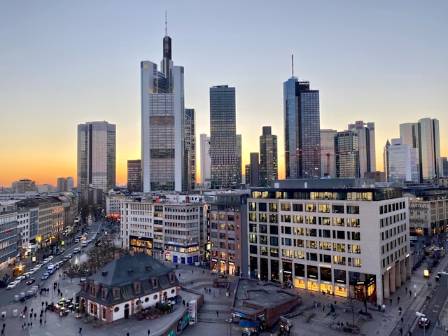
12 Fascinating Facts About Frankfurt’s Commerzbank Tower
Frankfurt am Main, sitting along the River Main in Germany’s Hesse state, boasts one of Europe’s most recognizable skylines. At the heart of its bustling financial quarter rises the Commerzbank Tower, a landmark that combines architectural brilliance with sustainable innovation. Here are twelve intriguing insights into this remarkable skyscraper.