Publisert
The Best Pixel Art of All Time
Pixel art is far more than a nostalgic nod to gaming’s past—it’s a bona fide artistic style that has shaped the medium from its humble beginnings to the modern indie renaissance. While early games leaned on pixels out of technical necessity, later titles elevated the form into a true art, infusing each frame with vibrancy, feeling, and boundless creativity.
Jane
Signatur
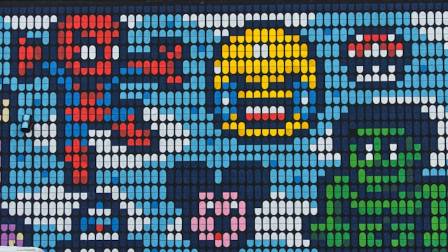
Pixel art is far more than a nostalgic nod to gaming’s past—it’s a bona fide artistic style that has shaped the medium from its humble beginnings to the modern indie renaissance. While early games leaned on pixels out of technical necessity, later titles elevated the form into a true art, infusing each frame with vibrancy, feeling, and boundless creativity.
Below are the ten most pivotal games that defined the evolution of pixel art.
1. Contra (1987) – Size Equals Impact
Long before Call of Duty and Doom dominated the action genre, Contra reigned supreme. This classic let players step into the shoes of an 80s action movie protagonist—even if that protagonist was just a tiny cluster of pixels darting through jungle terrain. Its pixel art was bold and rich in detail, with fluid animations that made shooting, leaping, and evading enemy fire feel thrillingly immersive.
And let’s not overlook the bosses: colossal, screen-occupying creatures that pushed the NES hardware to its absolute limits. Whether you were blasting alien abominations or narrowly surviving the deadly vertical scroll of the notorious waterfall level, Contra proved that pixel art could deliver intensity on par with any Hollywood blockbuster.
2. Mega Man 2 (1988) – The Benchmark for 8-Bit Excellence
For anyone who grew up during the NES era, Mega Man 2 was the game that tested reflexes, patience, and the willpower to resist hurling a controller. Beyond its legendary difficulty, however, it stands as one of the most visually refined and iconic examples of 8-bit pixel art.
Capcom’s team squeezed every possible detail from the NES’s limited color palette. Each Robot Master’s stage boasts a distinct aesthetic and mood: Flash Man’s neon-lit maze, Wood Man’s digital woodlands, and Quick Man’s eye-popping laser gauntlet all demonstrate how pixel art can craft diverse, immersive worlds with scarce resources.
And we can’t forget Mega Man himself! The tiny blue hero’s sprite is one of the most instantly recognizable in gaming history, with crisp, expressive animations that make every jump, shot, and inevitable death (rest in peace to all those lives lost in Heat Man’s disappearing block section) feel smooth and gratifying.
3. The Legend of Zelda: A Link to the Past (1991) – Pixel Art That Defined an Adventure Genre
This game didn’t just perfect the top-down adventure formula—it set the gold standard for how pixel art could create a deeply immersive, detailed world. Every dungeon, village, and hidden cave was crafted with intricate tile work, dynamic weather effects, and expressive character sprites.
Even today, A Link to the Past remains one of the most visually striking and easily navigable pixel-art games ever created. Every sprite serves a purpose, every color is selected with precision, and the game’s subtle use of visual cues to guide players is a masterclass in design.
4. Street Fighter II (1992) – The Dawn of Stylized Realism
Arcade screens never looked more impressive than when Street Fighter II was in action. This game’s pixel art didn’t just define fighting games—it established the standard for expressive character design, smooth animations, and over-the-top special effects.
From Ryu’s iconic Hadouken to Chun-Li’s lightning-fast kicks, every attack packed a satisfying punch, thanks to masterfully crafted sprite work. The backgrounds were equally detailed: who could forget the cheering crowd in Guile’s stage or the trumpeting elephants in Dhalsim’s temple? Street Fighter II wasn’t just a game—it was a visual spectacle.
5. Chrono Trigger (1995) – An RPG That Improves With Age
Gamers still rave about Chrono Trigger, and for good reason—it’s as close to a perfect RPG as one can get. A large part of its magic stems from its breathtaking pixel art. Akira Toriyama’s character designs translated seamlessly into sprite form, and the game’s vivid world, fluid battle animations, and charming character expressions made every moment unforgettable.
Even the battle transitions were revolutionary! Gone were the jarring cuts to a separate screen; instead, fights unfolded right in the overworld, with beautifully animated attacks that made every encounter feel like a genuine adventure. If you ever doubt pixel art’s emotional power, just watch Frog unsheathe his sword—you can’t help but feel something.
6. Metal Slug (1996) – Hand-Drawn Chaos and Explosive Action
No gaming experience is complete until you’ve witnessed a Metal Slug explosion. SNK’s legendary run-and-gun shooter doesn’t just feature great pixel art—it boasts some of the most detailed, over-the-top, and unapologetically excessive animation in gaming. Every tank, enemy, and hapless soldier is meticulously rendered, and the smooth, exaggerated animations turn chaos into a beautifully choreographed action film.
Critics at the time hailed it as “the best-looking 2D game ever made,” and honestly? They weren’t mistaken. From the way your character gasps for breath after a sprint to the absurdly elaborate knife stabs, Metal Slug treats every pixel as a chance to dazzle.
7. Castlevania: Symphony of the Night (1997) – Gothic Elegance in Pixel Form
If Dracula’s castle had a real estate listing, it would read: “Stunning gothic mansion, 1,000+ rooms, blood-red moon vistas, adorned with lavish chandeliers, minor ghost infestations.” Thanks to Symphony of the Night’s jaw-dropping pixel art, every inch of that castle exudes style and atmosphere.
From Alucard’s silky-smooth animations to the grotesque monster designs, every frame of this game is peak gothic fantasy. The pixel art doesn’t just support the gameplay—it immerses you in a dark, cursed masterpiece. And let’s not ignore Alucard’s impeccable style—if pixel art had a fashion show, he’d be the headline act.
8. Cave Story (2004) – Pixel Art’s Turning Point
Up until the early 2000s, pixel art in video games was mostly a necessity. The 80s and 90s titles on this list used pixel graphics because there was no alternative—hardware limitations dictated how characters, environments, and animations could be created, and developers maximized every bit of detail from their tiny sprite palettes. By the mid-2000s, however, 3D graphics had taken over, and pixel art was no longer a requirement—it was a choice.
That’s where Cave Story comes in. Created by solo developer Daisuke "Pixel" Amaya, this indie masterpiece didn’t rely on pixel art out of necessity—it embraced it because pixel art could still tell a rich, emotional, and visually captivating story. The game’s sharp, expressive sprites gave its characters a charm 3D models couldn’t match, while environments filled with ancient ruins, glowing caverns, and mysterious laboratories felt alive in a way only great pixel art can achieve.
Cave Story was more than a great game—it was a declaration that pixel art wasn’t going anywhere. From that point on, pixel art ceased to be a technical constraint and became an artistic decision. Every subsequent game on this list, from stylish fighters to emotionally resonant RPGs, used pixel art intentionally, proving that even in the HD era, sprites could deliver powerful experiences.
9. Superbrothers: Sword & Sworcery EP (2011) – A Pixel Art Dreamscape
Some pixel art games strive for realism; others, like Sword & Sworcery, take a more abstract, painterly approach. This game feels like wandering through a dream—its surreal landscapes, haunting color schemes, and atmospheric lighting make it one of the most visually unique pixel games ever created.
It’s minimalist yet deeply evocative, proving that a few carefully placed pixels can be just as immersive as the most detailed 3D world. Additionally, the game’s eerie, chiptune-driven soundtrack amplifies its trippy, otherworldly atmosphere.
10. Fez (2012) – Pixel Art Goes 3D
At first glance, Fez looks like a charming, traditional pixel-art platformer. But once you rotate the world, everything you thought you knew about 2D space crumbles.
Fez uses pixel art in a mind-bending way, transforming a seemingly flat world into a shifting, multi-dimensional puzzle. It’s like taking a classic SNES game and adding an extra layer of magic. Every rotation reveals new details, proving that pixel art isn’t just about nostalgia—it can be a playground for innovative ideas.

Flere anbefalte saker

How to Draw a Crystal Ball
Learn to create a beautiful crystal ball drawing with this easy step-by-step guide. Using simple tools and approachable techniques, you can produce an eye-catching and magical illustration suitable for any skill level.
Masterclass in One-Point Perspective: A Step-by-Step Urban Street Guide
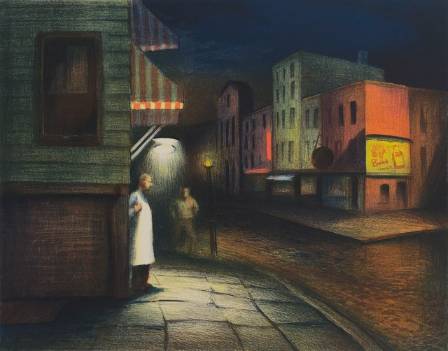
Grasping the fundamentals of single-point perspective opens up a world of artistic possibilities. Once the core concept becomes clear, it serves as the foundation for creating everything from three-dimensional typography to complex optical illusions. This tutorial provides a comprehensive, stage-by-stage demonstration of how to construct a realistic street scene, designed to help this essential drawing technique finally "click" for artists of all ages.

Intriguing Historical Facts and Trivia About Vintage Automobiles
While the definition of a "classic" car often sparks debate among motoring enthusiasts, it generally refers to an older vehicle that possesses a significant status or historical value, ensuring it is preserved rather than scrapped. Sharing knowledge is a cornerstone of the collector community. To enhance your next conversation with fellow fans, here are several fascinating details about the history and development of the automobile.

The Most Enchanting Reasons to Visit the Maldives
Introduction Made up of about 1,200 coral islands ringed by crystal-clear waters, the Maldives is a destination where beauty and adventure mingle. Known for its year-round warmth, pristine beaches, and vibrant marine life, it appeals to couples on honeymoons, thrill-seekers, and travelers alike. Here are five memorable reasons to put the Maldives on your travel list.
Burj Khalifa: Touching the Sky with Architectural Grandeur
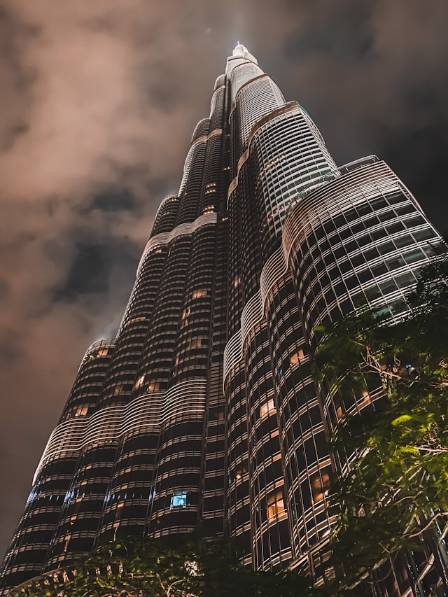
Over the last two decades, the field of architecture and structural engineering has witnessed a remarkable ascent, giving rise to towering skyscrapers that now grace the skylines of major global cities. Yet, claiming the title of the world's tallest building elevates a structure to an unparalleled status.

4 World's Most Breathtaking Sunsets
There's an inherent majesty in witnessing the sun bid farewell to the day, yet the definition of a breathtaking sunset varies from person to person. In essence, a stunning sunset embodies whatever resonates with you. Despite sharing the same celestial phenomenon, each of us interprets and embraces sunsets through our unique experiences. For additional recommendations centered around the sun, explore our comprehensive guide to the finest winter sun destinations across the globe.

The Art of Italian Pasta Making
Explore dough's artistry—pasta, noodles, pancakes, and dumplings craft a delicious masterpiece.

Pumpkin Spiced Yayoi Kusama
Yayoi Kusama, the legendary Japanese artist born in 1929, began her career 69 years ago. Nevertheless, the world discovered her just a couple of years back. Now it’s trying to make up for a lost time through numerous exhibitions that are being organized around the world. In 2017, Kusama even opened an entire museum in Tokyo dedicated to her polka-dotted oeuvre. But what do pumpkins have to do with all this?

Discover the 5 Most Colorful Natural Wonders on Earth
Take a moment to gaze at the vastness of our planet, where a stunning array of colors stretches from the vibrant sky to the rich earth beneath our feet. Whether it’s painted peaks, vivid deserts, or striking rivers, nature offers a spectacular palette that captivates our senses.

The Springbok: Master of the Kalahari
The springbok (Antidorcas marsupialis) stands as one of southern Africa's most iconic antelope species, demonstrating extraordinary resilience in the challenging Kalahari Desert environment. This elegant creature has evolved remarkable survival strategies that enable it to thrive where few other large herbivores can persist.